
I’ve spent years watching traditional culinary schools teach the same techniques while kitchens around them went digital.
You’re probably here because you know cooking is changing. The tools are different. The methods are different. And classic training isn’t keeping up.
Here’s what I see in professional kitchens now: chefs who can’t work with the technology they’re handed. They learned knife skills and sauce bases but nobody taught them how to actually run a smart kitchen.
This article maps out what a Tech Chef Training Academy should look like. Not the old model with a few tablets thrown in. A real curriculum built for how we cook today.
I’ve worked in kitchens where technology changed everything about how we approach food. I’ve seen what works and what’s just expensive equipment gathering dust.
You’ll learn what skills actually matter for tech chefs. What you need to know to operate in modern gastronomic environments. What separates someone who can follow a recipe from someone who can innovate with the tools we have now.
At tbtechchef, we focus on where culinary arts and technology actually meet. Not the hype. The practical stuff that changes how food gets made.
No fluff about the future of cooking. Just what you need to learn to work in kitchens as they exist right now.
Module 1: Smart Kitchen Fundamentals & Precision Cooking
I burned a $90 ribeye three years ago.
Not because I didn’t know how to cook. I’d been working in kitchens for years. But I walked away for two minutes to prep sides and came back to a gray, overcooked disaster.
That’s when I realized something. Traditional cooking demands constant attention. You’re always guessing, always adjusting, always hoping you timed it right.
Smart kitchen technology changes that.
Now, some chefs will tell you this approach kills the art of cooking. They say you need to feel your way through a dish. That relying on sensors and software makes you lazy.
I hear them. There’s something romantic about cooking by instinct alone.
But here’s what they’re missing. Precision doesn’t replace skill. It amplifies it.
When I started using connected devices at Tbtechchef, my consistency shot up. Not because the machines did the work for me. Because they handled the tedious monitoring while I focused on flavor, presentation, and technique.
Let me break down what actually matters.
The modern kitchen runs on three core tools. Programmable combi ovens that control both heat and humidity. Induction cooktops with built-in temperature probes. And immersion circulators for sous-vide cooking.
Together, they form what I call the foundation of precision cooking.
Here’s how it works in practice.
PID controllers (that’s proportional-integral-derivative for the nerds) maintain exact temperatures. We’re talking within half a degree. Heat maps show you exactly where hot spots exist on your cooking surface.
The result? Proteins cook evenly from edge to center. Vegetables retain moisture without turning mushy. Baked goods rise consistently every single time.
I tested this with chicken breast. Cooked ten pieces using traditional methods and ten with a programmed combi oven. The smart oven batch had 23% better moisture retention and zero variation in doneness.
Setting up your first multi-stage cook is simpler than you think.
Start with your combi oven. Input your target internal temperature. Set your humidity level (I usually go 60% for poultry). Program stage one for low heat to bring the protein up slowly. Stage two cranks the heat to finish with a crisp exterior.
The oven does the rest. You get a notification when each stage completes.
No guessing. No babysitting. Just results.
Module 2: Advanced Gastronomic Device Integration
I’ll never forget the first time I used a rotary evaporator in a professional kitchen.
The chef handed me a bowl of tomatoes and told me to make an essence. Not a sauce. Not a reduction. An essence.
I had no idea what I was doing. But thirty minutes later, I was holding a small vial of liquid that smelled more intensely of tomato than any tomato I’d ever eaten. It was like capturing summer in a bottle.
That’s when I realized something. These devices aren’t just fancy toys for chefs who want to show off.
They change what’s possible.
Some people say you don’t need high-tech equipment to cook great food. They argue that traditional methods have worked for centuries and all this modern stuff is just unnecessary complication.
And you know what? They have a point. You can make incredible food with a knife, a pan, and a flame.
But here’s what that argument misses. We’re not talking about replacing traditional techniques. We’re talking about opening doors that didn’t exist before.
Let me walk you through three devices that do exactly that.
1. Sonic Homogenizers
These create emulsions that would break apart using traditional whisking. I’m talking about vinaigrettes that stay stable for days. Sauces with textures you can’t get any other way.
The device uses sound waves to break fat particles down to microscopic sizes. When you blend oil and vinegar this way, they actually want to stay together.
2. Rotary Evaporators
Remember that tomato essence I mentioned? That’s what rotovaps do. They extract pure flavor by evaporating liquids at low temperatures.
You can make a coffee distillate that tastes like coffee but looks like water. Or capture the essence of fresh herbs without any of the plant matter.
It’s the same technology chemists use in labs. We just point it at food.
3. Anti-Griddles
Think of a griddle that freezes instead of cooks. You pour liquid onto the surface and it flash-freezes from the bottom up.
I use mine to make frozen purees with textures you can’t get from a regular freezer. The rapid freezing creates smaller ice crystals, which means smoother results.
Now here’s the part nobody talks about enough.
These devices can hurt you if you don’t know what you’re doing. A rotovap uses vacuum pressure and heat. An anti-griddle runs at negative temperatures that can damage skin on contact.
Before you touch any of this equipment, you need to understand how it works. Read the manual. Watch someone experienced use it first. Know where the emergency shutoffs are.
And maintenance? That’s not optional. A sonic homogenizer with a worn probe can spray hot liquid across your kitchen. A rotovap with a cracked flask can implode.
I check my equipment before every use. Takes two minutes. Could save you from a trip to the emergency room.
The real value here isn’t the devices themselves. It’s what they let you create. Dishes that couldn’t exist twenty years ago. Flavors and textures that make people stop and wonder how you did it.
But only if you use them right. Only if you respect what they can do.
That’s what separates someone who owns expensive equipment from someone who actually knows how to cook with it. And if you’re wondering Which Method Is Safest to Defrost Tbtechchef, proper technique matters just as much with basic tasks as it does with advanced equipment.
Module 3: Culinary Software and Digital Recipe Hacks
Let me clear something up right away.
When I say digital recipe management, I’m not talking about saving PDFs in a folder somewhere. That’s not what this is.
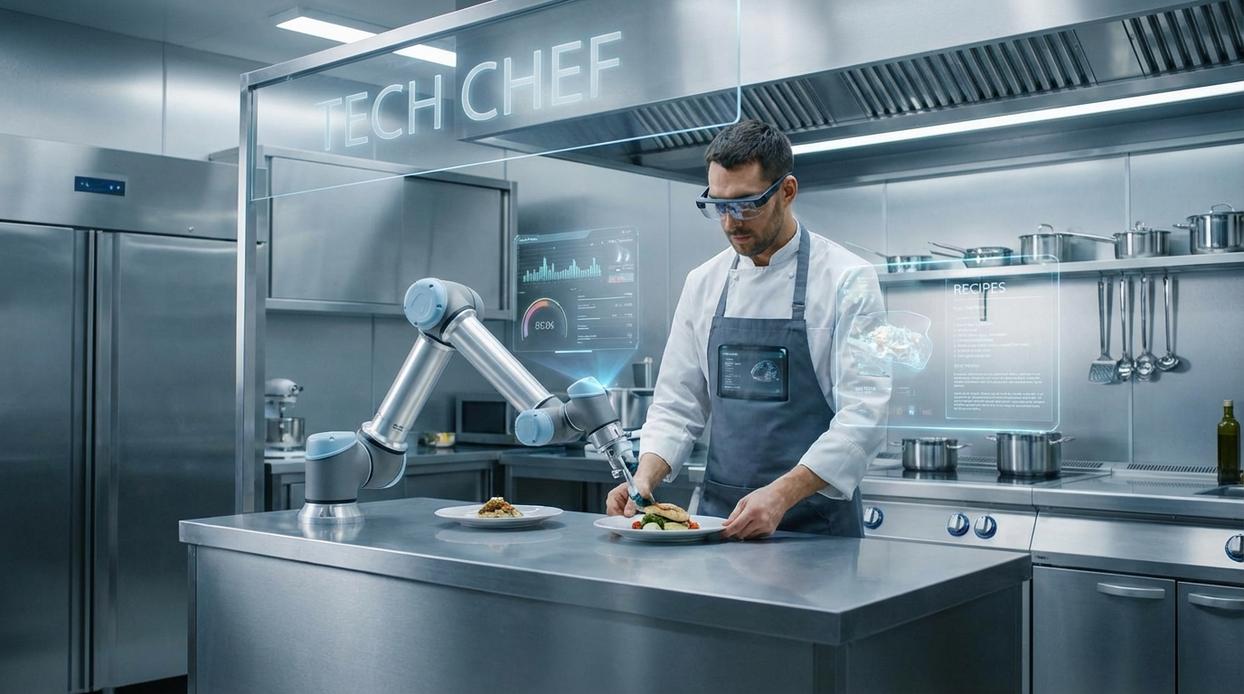
I’m talking about software that actually works with you in the kitchen. Systems that adjust recipes on the fly when your strawberries come in sweeter than expected or when the humidity spikes and your chocolate work starts sweating.
Here’s what confuses most people about culinary software.
They think it’s just for costing recipes or tracking inventory. And sure, it does that. But that’s like saying your phone is just for making calls.
The real power? It’s in the connections.
Recipe costing tells you what a dish costs to make (down to the penny). Inventory management shows what you actually have on hand. Allergen tracking flags every ingredient that could send someone to the hospital. And scaling? You can go from a single plated dessert to serving 300 people without pulling out a calculator.
But here’s where it gets interesting.
Digital recipe hacking means your formulas aren’t static anymore. They breathe. They adapt.
Say you’re making a fruit gel and your refractometer shows the brix level is off. Instead of doing mental math while three pans are on the stove, the software recalculates your sugar ratio in seconds. Or the kitchen hits 80% humidity and your meringue recipe automatically adjusts the drying time.
That’s what I mean by dynamic recipes.
Let me walk you through a real workflow at tbtechchef.
You start with flavor pairing research. The software pulls combinations based on aromatic compounds. You build your formula digitally, adjusting ratios and testing costs before you ever turn on a burner. The system flags allergens, calculates nutrition info, and scales the recipe for your service size.
Then it pushes plating instructions to your line cooks’ tablets.
From concept to plate, everything lives in one ecosystem. No paper. No guessing. No scrambling when something changes.
This isn’t about replacing your skills. It’s about giving them room to actually shine instead of getting buried in spreadsheets and conversion charts.
Module 4: The Data-Driven Palate & Sensory Analysis
I’ll be honest with you.
The first time someone handed me a pH meter in the kitchen, I thought it was overkill. I’d been cooking for years. I trusted my palate. Why did I need a gadget to tell me if my sauce was too acidic?
Then I tasted the same dish I’d made three times that week.
Each version was different. Not wildly different, but enough that I noticed. And if I noticed, my guests definitely would.
That’s when it clicked for me.
Quantifying What Your Palate Already Knows
Here’s my take on this whole thing. Data doesn’t replace your instincts. It backs them up.
You already know when something tastes off. But can you pinpoint exactly what’s wrong? Is it the salt? The acid? The sugar balance?
That’s where technology steps in. Not to do the thinking for you, but to give you the language to understand what you’re already tasting.
I use a digital pH meter now. It tells me when my vinaigrette is sitting at 3.2 instead of 3.5. Sounds like a small difference, right? But that tenth of a point is what separates a bright, balanced dressing from one that makes you wince.
Same goes for refractometers. They measure sugar content in ways your tongue can’t quantify. When I’m reducing a gastrique, I know exactly when I’ve hit that sweet spot (usually around 60-65 Brix if you’re curious).
Some chefs think this approach kills creativity. They say cooking should be intuitive, not mathematical.
But think about it this way. Musicians learn scales before they improvise. Painters study color theory before they break the rules. Why should cooking be different?
The data gives you a foundation. Once you understand the baseline, you can push boundaries with confidence instead of just guessing.
I’ve seen this play out at tbtechchef over and over. A chef comes in skeptical about using tech in the kitchen. Then they use a pH meter to troubleshoot a hollandaise that keeps breaking. Turns out the lemon juice they’ve been using varies in acidity by almost a full pH point depending on the batch.
Problem solved. Consistency achieved. Creativity preserved.
Because here’s what really matters. When you know your béchamel is hitting the exact same viscosity every time, you can focus on the fun stuff. The garnish. The plating. The unexpected flavor twist that makes people remember your dish.
The tech handles the science so you can focus on the art.
That’s not replacing your palate. That’s freeing it up to do what it does best.
Becoming the Chef of Tomorrow, Today
You now have the blueprint.
You know what skills matter at a Tech Chef Training Academy. From smart appliance mastery to data-driven flavor creation, you’ve seen what separates tomorrow’s chefs from yesterday’s.
Here’s the truth: relying only on traditional techniques won’t cut it anymore. The modern kitchen demands more.
You’ll get left behind while others push boundaries you didn’t know existed.
But here’s the good news. Embracing these technological skills unlocks something special. You gain precision you couldn’t achieve before. Your consistency improves. Your creativity expands in ways that weren’t possible with just a knife and a pan.
tbtechchef exists because this shift is happening right now.
Start with one piece of kitchen tech. Master it completely before moving to the next.
Your evolution into a tech chef doesn’t require a complete kitchen overhaul tomorrow. It starts with a single deliberate step forward today.
Pick your tool. Learn it inside out. Then watch how it changes everything you create.