
Commercial kitchens are evolving faster than ever, driven by data, automation, and intelligent connectivity. If you’re searching for clear, practical insights into how iot in commercial kitchens is transforming operations, efficiency, and food quality, this article is designed for you. We break down how connected devices, smart sensors, and integrated kitchen systems are reshaping everything from inventory management to energy control and predictive maintenance.
Many operators struggle to separate hype from real-world application. Which technologies actually improve workflow? What delivers measurable ROI? And how can smart kitchen tools integrate seamlessly without disrupting service? We address these questions with research-backed analysis, industry case studies, and hands-on evaluation of emerging culinary technologies.
By the end, you’ll understand how connected systems streamline back-of-house coordination, reduce waste, enhance food safety compliance, and unlock data-driven decision-making—giving your kitchen a competitive, future-ready edge.
The Smart Kitchen Revolution: Beyond Gadgets to True Efficiency
Smart kitchens aren’t about flashy screens; they’re about measurable gains. By integrating sensors, connected ovens, and real-time inventory dashboards, operators cut waste, control portions, and standardize output. That’s the promise of iot in commercial kitchens: data that works as hard as your line cooks.
The payoff? Lower food costs, faster prep, fewer errors, and smoother shifts (yes, even on Friday night rush). Predictive maintenance reduces equipment downtime, while automated temperature logs support food safety compliance (FDA Food Code).
In short, you gain consistency, savings, and breathing room. Staff can focus on creativity instead of constant crisis control. Every shift improves.
Solving the Core Challenges: Where IoT Makes the Biggest Impact
1. Food Waste & Spoilage
Food waste is more than an ethical issue; it’s a profit leak. The FDA estimates that improper temperature control is a leading cause of foodborne illness in foodservice environments. Smart refrigerators and freezers use connected sensors (devices that collect and transmit real-time data) to monitor temperature fluctuations 24/7. If a compressor starts failing, predictive maintenance—technology that anticipates breakdowns before they happen—triggers alerts before thousands of dollars in inventory spoil. For example, the National Restaurant Association notes that inventory loss can account for up to 10% of food costs annually. Real-time alerts turn “We didn’t notice” into “We fixed it immediately.”
2. Inconsistent Food Quality
Meanwhile, consistency remains a daily battle. Automated cooking equipment like smart ovens and sous-vide systems ensures precise temperature and timing controls. Because these devices follow programmed specifications, every steak hits medium-rare at 130°F, regardless of who’s on the line (yes, even on a chaotic Friday night). Studies from hospitality tech providers show kitchens using connected equipment report measurable reductions in remake rates and customer complaints.
3. Operational Inefficiency
Finally, operational inefficiency quietly drains margins. IoT-driven dashboards track equipment usage, energy consumption, and workflow patterns in iot in commercial kitchens. According to Energy Star, commercial kitchens can reduce energy use by 10–30% with monitoring systems. In other words, data exposes bottlenecks—and fixes them.
Automated Inventory Management: Explore systems that use smart scales on shelves and in containers to track ingredient levels in real-time, automatically generating purchase orders when stock is low to prevent shortages.
This is not theoretical: a 2023 National Restaurant Association report found that 96% of operators cite food cost volatility as a top risk. Smart weight-based sensors reduce shrinkage by up to 20%, according to a pilot study by Deloitte on mid-sized restaurant groups. When flour bins or sauce containers hit preset par levels (the minimum quantity required before reordering), the system triggers a supplier API call and logs the transaction in your ERP.
Predictive Equipment Maintenance: Sensors embedded in fryers, grills, and ovens capture vibration, temperature, and energy draw data in real time, flagging anomalies before a breakdown occurs. The U.S. Department of Energy estimates that predictive maintenance can cut equipment downtime by 30% to 50% in industrial settings, and restaurants are seeing similar gains. One national fast-casual chain reported saving $2,000 per store annually after installing connected fryer sensors that detected oil degradation patterns early.
Enhanced Food Safety & Compliance: Automated temperature logging in cold storage replaces manual clipboard checks with continuous digital records. Under HACCP (Hazard Analysis and Critical Control Points), operators must prove safe holding temperatures; cloud-based logs create a tamper-proof audit trail inspectors can verify in seconds (no more 3:00 a.m. panic before an inspection).
Critics argue that upfront costs and cybersecurity risks outweigh the benefits. However, case studies on iot in commercial kitchens show ROI within 12–18 months through waste reduction and avoided emergency repairs.
Pro tip: start with high-risk, high-cost assets first to prove value before scaling across the kitchen. Data transparency also improves insurance negotiations, as documented sensor histories demonstrate due diligence and can lower premiums for compliant operators during audits annually.
The Business Case: Measuring the ROI of a Connected Kitchen
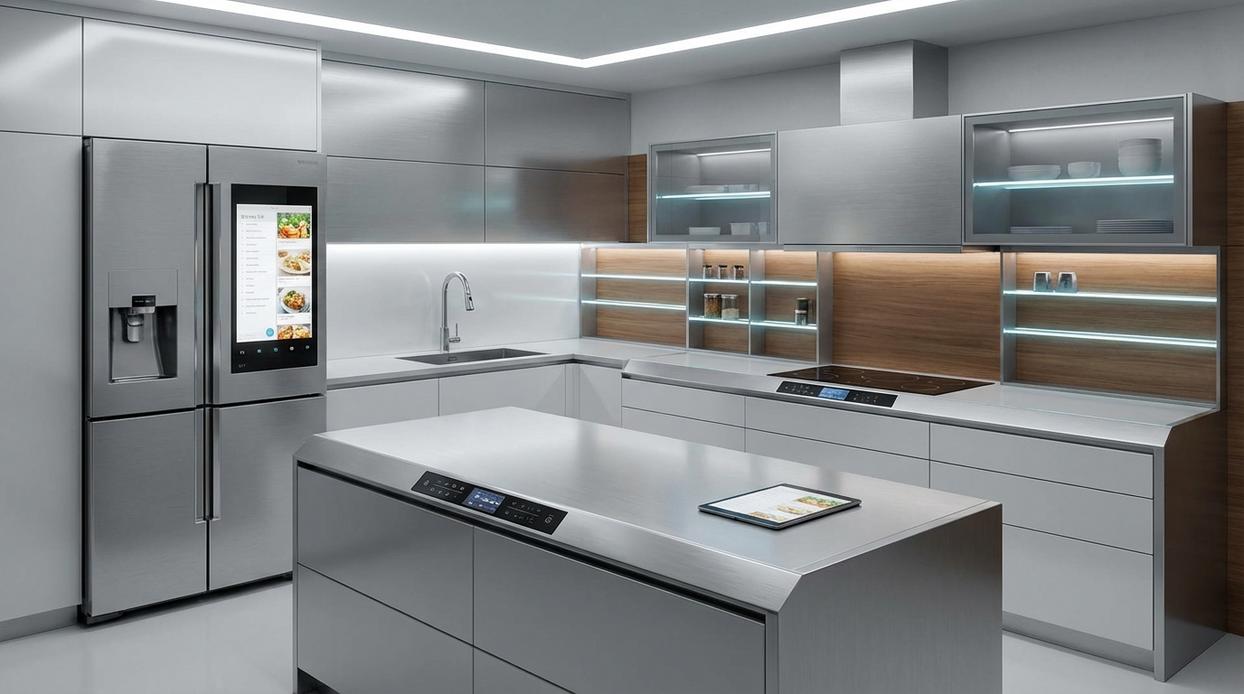
Investing in a connected kitchen isn’t about shiny gadgets (though they do look impressive). It’s about measurable returns. Let’s break down where the numbers actually move.
Hard Cost Savings
Smart sensors and analytics routinely deliver a 15–20% reduction in food waste by tracking spoilage, portioning accuracy, and inventory rotation (FAO estimates roughly 14% of food is lost before retail). Energy dashboards tied to equipment scheduling can drive a 10% decrease in energy consumption, according to U.S. Department of Energy findings on optimized commercial systems. That’s margin you can see on a monthly P&L.
Productivity Gains
Automation handles repetitive tasks like temperature logging and equipment diagnostics. In kitchens using iot in commercial kitchens setups, chefs reclaim hours previously spent on compliance checks. The result? Higher labor productivity without increasing headcount (a rare win in hospitality). Pro tip: start with automating HACCP logs before expanding.
Improved Customer Satisfaction
Consistent cook times and streamlined prep reduce ticket times and variability. Faster service plus reliable quality equals stronger retention (and yes, that five-star review momentum matters).
What You Should Do Next
- Audit waste and energy baselines.
- Prioritize automation with immediate ROI.
- Pilot one workflow before scaling.
If you’re experimenting, explore creating automated cooking workflows at home to test concepts before full deployment.
Practical IoT integration works best when you resist the urge to overhaul everything. Start small. I always recommend piloting automated temperature monitoring, because it delivers clear ROI and fast wins. Once you see the data preventing food waste and compliance headaches, skepticism fades. Next, prioritize connectivity. A weak Wi-Fi network will sabotage even the smartest sensors (and yes, I’ve seen it happen). Finally, choose intuitive dashboards. If staff need a manual, adoption stalls. In my view, simplicity beats flashy features every time. The real power of iot in commercial kitchens lies in steady, confident scaling, not tech theatrics for longevity.
Building the High-Performance Kitchen of Tomorrow
Inefficiency and waste used to be shrugged off as the cost of doing business (like overcooking fries during a rush). Not anymore. Smart kitchens are practical, not futuristic. By adopting iot in commercial kitchens, operators transform scattered appliances into a unified, data-driven system that tracks inventory, energy use, and equipment health in real time.
What’s next after understanding the potential?
- Audit your biggest bottleneck.
- Compare one connected solution.
- Pilot, measure, refine.
Productivity rises. Waste drops. Margins improve. The kitchen stops reacting and starts anticipating. Data becomes your competitive edge. Starting today.
Smarter Kitchens Start with Smarter Decisions
You came here to understand how technology is transforming modern kitchens—and now you’ve seen how smart tools, automation, and connected systems are reshaping the way food is prepared, managed, and delivered. From precision cooking devices to data-driven inventory systems, the future of food isn’t just creative—it’s connected.
The real challenge isn’t whether innovation is happening. It’s keeping up without falling behind. Inefficient workflows, inconsistent results, rising costs, and wasted ingredients can quietly drain your operation. Embracing iot in commercial kitchens and integrated smart solutions directly tackles those pain points—boosting consistency, cutting waste, and unlocking measurable efficiency.
Now it’s your move. Start evaluating the gaps in your current kitchen setup and identify where smart integrations can deliver immediate impact. Explore proven tools, test scalable solutions, and implement systems that streamline performance from prep to plate.
Don’t let outdated processes slow you down. Discover the latest tech-enhanced cooking strategies and smart kitchen innovations trusted by forward-thinking culinary professionals. Upgrade your kitchen today and turn efficiency into your competitive edge.